
The process of Aluminium gravity-fed die casting
Aluminium gravity-fed die casting is a precise, multi-stage process that relies on experience, timing, and careful control to produce high-quality components.
The Furnace.
The process begins by loading aluminium ingots into the furnace. Up to 30 ingots are heated to approximately 680°C until fully molten, which typically takes around three hours. This is often done overnight so casting can begin early the next day.
KJD Precision Engineering operates a 400kg electric holding furnace, constructed from steel and fire brick, with a silicon carbide crucible that safely contains the molten aluminium.
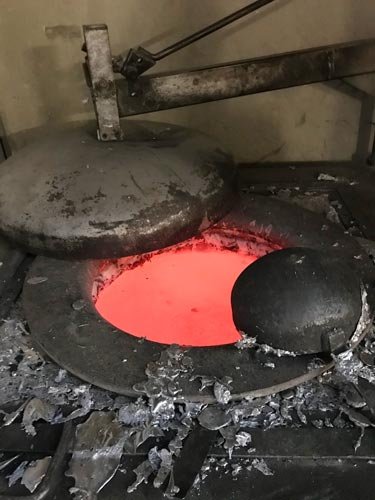
Image of molten aluminium in the KJD furnace.
casting Process
Once the aluminium is molten and the die is set in the hydraulic press, the metal is transferred by hand using a ladle into the runners of the die. Gravity then draws the aluminium through the mould.
The aluminium is left to cool and solidify, usually for around two minutes, depending on the size and complexity of the casting. This stage relies heavily on operator experience to ensure each pour is accurate and consistent.
Once set, the die is opened and the casting is ejected using a hydraulic system, then removed manually.
Watch video of cleaning the die to prepare for pouring.
Dressing & finishing
After casting, each component is finished through several steps:
Runners and risers are removed and recycled back into the furnace
Surfaces are ground and smoothed using a linisher or belt grinder
Additional machining may be completed using CNC milling for precision areas
Final cleaning removes any residue before packing and delivery
Watch video of the pouring process, followed by the cast removal.
The Tooling or Die
The die plays a critical role in the quality of the final product. It is mounted in a hydraulic press and designed to allow molten aluminium to flow efficiently through the mould.
Each die is typically manufactured from two blocks of tool steel and machined to a high level of accuracy using CNC milling. Features such as runners and risers are carefully engineered to achieve the desired finish and structural integrity.
Dies can be used for many casting cycles but require regular cleaning during production and ongoing maintenance to ensure consistent performance.
Watch video of the dressing process from removal of runners and risers through grounding/smoothing to CNC Milling to the final product ready for delivery.